
How to Plan Long Term Travel
At a ChooseFI meetup recently, one of our new friends asked a simple question: where do you even begin when planning long term, slow travel?
Do you start with the budget? If so, how could you possibly calculate how much you might need?
What about the locations? Do you consider the weather first? Or whether there are big events, or if it will be high season & super crowded?
A lot of people assume that the length of the trip is directly corelated with how expensive it will be, or how difficult it will be to plan. Thankfully, this is not the case! In fact, not only is a month in the locations we will be visiting less expensive than a one-week trip would be- but it is also much cheaper than just staying in Charlotte!
Crazy, right?
Let’s get into it- here are my steps for planning long term, slow travel.
Step One: The Anchors
When I think about our upcoming travel, I’m looking at it in 6 month to 1 year chunks. So- in the next six months, what are the things that are happening at a specific time that we do not want to miss? These become the anchor points that I build the rest of the itinerary around.
One of our biggest “whys” for early retirement and slow traveling is spending more intentional time with our families. Ryan’s family lives in the Chicago area and mine lives in east Tennessee. This has meant that during our working years, we have been able to see them each 1-2 times per year, in short spurts, usually around the holidays.
We’ve missed our nephews’ basketball games and track meets. We’ve missed celebrating birthdays. We’ve missed popping into my niece’s gymnastics practice or reading to my youngest nephew’s class on a regular weekday.
To that end, our anchor points are spending a month near each of our families. This year, we will be in the Chicago area for the month of November (for Ryan’s birthday, Thanksgiving, basketball games, etc) and near my family in TN for December (for my niece’s birthday, Christmas, NYE, etc).
In 2027, we plan to switch those months, but also add the anchor of being back in Charlotte for Ryan’s daughter’s graduation from undergrad.

Can’t wait to spend more time with these cuties.
Step Two: Proximity + Preference
Because we are sticking to car travel through the US & Canada for the foreseeable future, the next step is to look at spots we’ve been dying to explore within doable driving distance from our anchor points.
Since we will be leaving TN in mid-July (after dropping our stuff in my parents’ basement, thanks mom & dad!) and want to be in Chicago by November 1-ish, that gives us 3.5 months in between to travel.
With that amount of time, it wouldn’t make a lot of sense to drive straight out to the west coast, for example. With our rule of no more than 5-6 hours of drive time per day, it would take eons to get out there and eons to get back.
That doesn’t sound super fun for our first foray into long term travel!
We’ve always wanted to spend some time leaf-peeping in New England in the fall, and I fell in love with the idea of exploring Nova Scotia during late summer in the hopes of escaping the heat. So, we’ll take a few days to drive up to Cape Breton in Nova Scotia, stay there for August and part of September, and then pop back into New England to hike around the White Mts in NH, the Green Mts in VT, and then spend a month in Bar Harbor to explore Acadia National Park in Maine.
Once we are in the area, getting to all of these spots are easy one day drives, and when we are ready to head to Chicago in November, we’ll take a few days to stop at Niagara Falls en route.
Step Three: Budget
Time to nerd out!
Ryan & I have used Ramit Sethi’s free Conscious Spending Plan for a few years now- and it has realllllly helped me get a handle on my feelings of scarcity. Ramit claims (insists) that it’s not a budgeting tool, but that’s how we’ve used it- and if it helps you in that way too, I’d highly recommend it.
When I sat down to create a long term travel budget, I started with the amount we would have coming in from Ryan’s pension plus what we will take from our investment portfolio- the total went into the “Gross Monthly Income” cell. I then calculated an 8% effective tax rate (which is likely conservative but that’s a rabbit hole for another day) for “Net Monthly Income.”
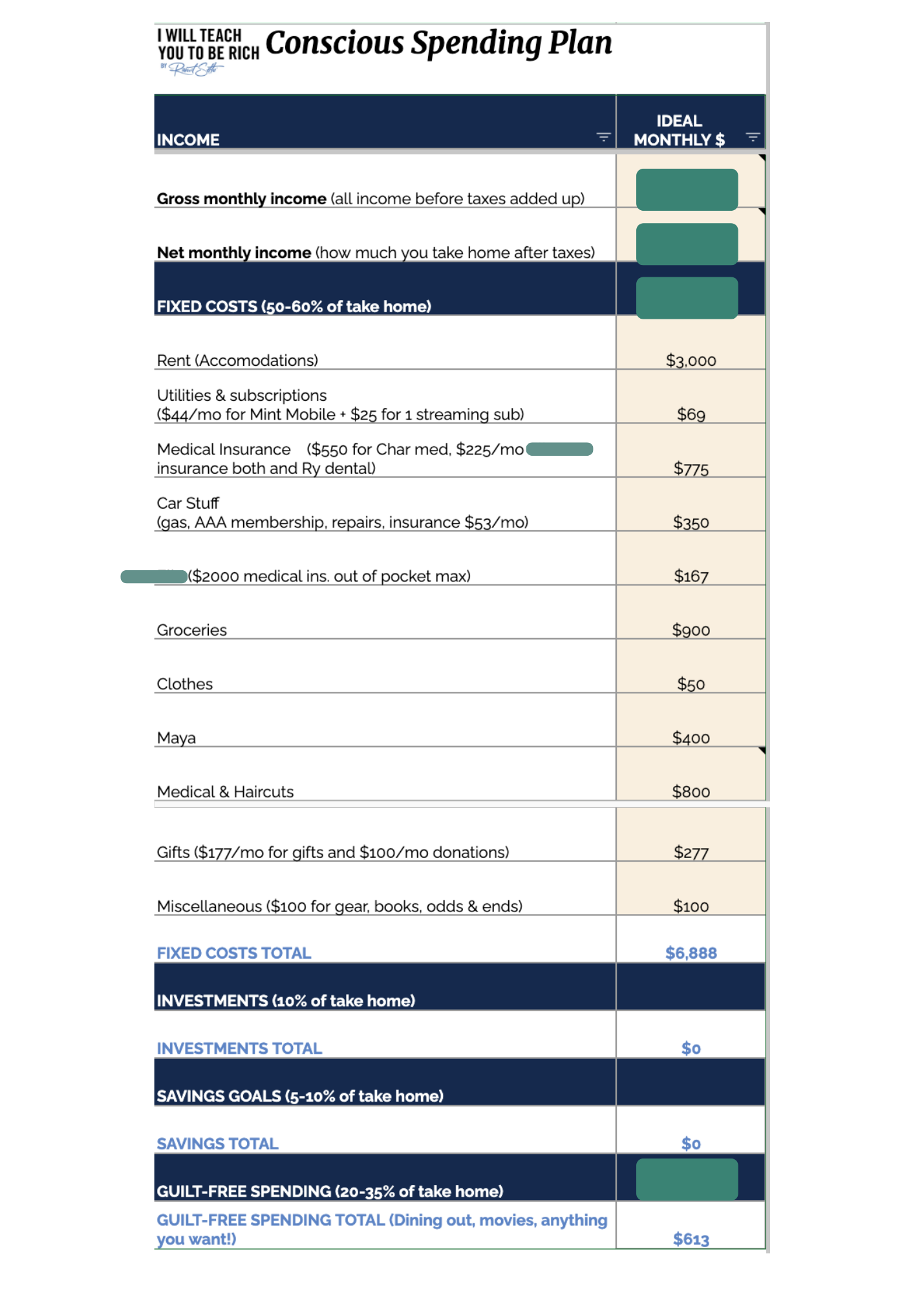
I’ve blocked out our real numbers in several places, along with Ryan’s daughter’s name.
High level, you’ll notice that we are putting away $0 for savings and retirement- this is because we’ve reached our goals and don’t need to add any more. However, I kept the cells in the spreadsheet in case we come into unexpected income.
Nitty gritty:
I subtracted the bills that we currently have that we won’t pay while long term traveling. These include: renter’s insurance; car insurance for two cars (we’ll go down to one); all utilities (water, electric, heat, internet); and the majority of our yearly subscriptions.
After subtracting everything, I did some real math to figure out future bills- what would health insurance cost for me on the ACA in TN? What have we averaged in other areas, like medical expenses after the premiums, or Maya’s health and general care? What do we want to spend over the course of the year in gifts, and what is that divided by 12? Etc.
Accommodations: this is where things got interesting! Initially, I budgeted $3300/mo for our lodgings. I knew that pet-friendly places were a bit more pricey and expected that we’d pay a premium to stay near places like Acadia National Park.
HOWEVER. Hosts on Airbnb and VRBO often offer ginormous monthly stay discounts- and when they don’t, there is the magical Furnished Finder!
Originally started to house first responders like travel nurses, Furnished Finder offers only month long stays, fewer frills, and old school leases- but you can snag a beautiful place for much, much less.
Just check out where we are staying in Bar Harbor, near Acadia:
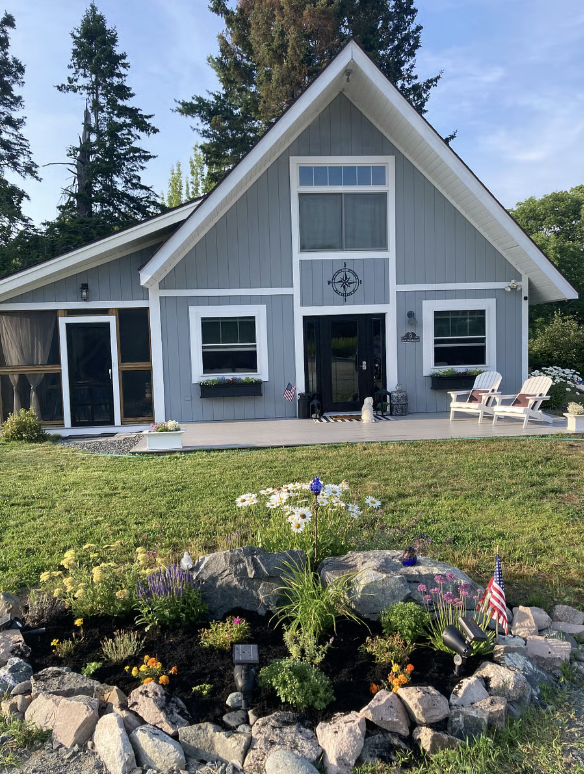
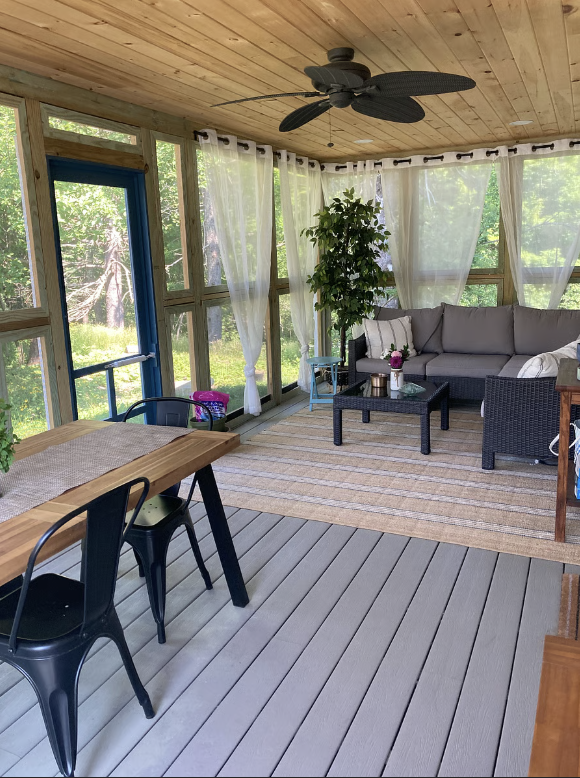

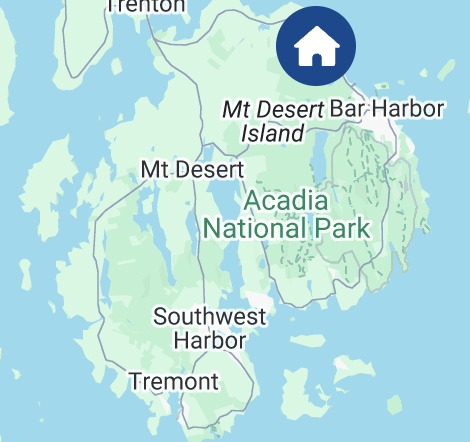
This 3-bedroom, 1.5 bathroom house was just $3200 for an entire month- when I looked on Airbnb and VRBO, they didn’t have any properties even available for that month on the island, no matter the budget.
And- after booking all of our stays for the 6-month period from July-December, the average came out to just $3000/mo. Wild.
Step Four: One-Night Stays
In order to keep to our 5-6 hour drive per day rule, I needed to book some 1-night stays to get us up to Canada.
First, I looked at who we knew & loved who lives near our proposed route, and huzzah! My friend Kara and her family live in Baltimore and have agreed to host us for a night.
Beyond that night, I needed to find pet-friendly 1-night stays that weren’t exorbitant. This automatically ruled out Airbnb and VRBO, due to all of the fees they tack on. We’ve already learned that Furnished Finder is just for month-long stays or longer, so I started looking into hotels.
The qualifications were:
Pet-friendly
Free breakfast included
Near or around $100/night
The greatest resource for this was an app called Bring Fido. By using this app to book the hotels we needed, I knew we’d be getting pet-friendly stays. I could also filter for “no pet fees” and “free breakfast.” Beyond that, I could see reviews from other travelers. Perfecto!
So that’s the process- once we are officially done with work (May 29!!!!!) we’ll start thinking about specific hikes we want to do or what we want to see in each location.
Have you ever considered long term slow travel, even for a month or two? What questions do you have about the process? Put them in the comments below or send me an email.